Alarm to Action & Damage Control
Efficient Communication for Emergency Response
Dynamic communication software designed for emergency response and damage control
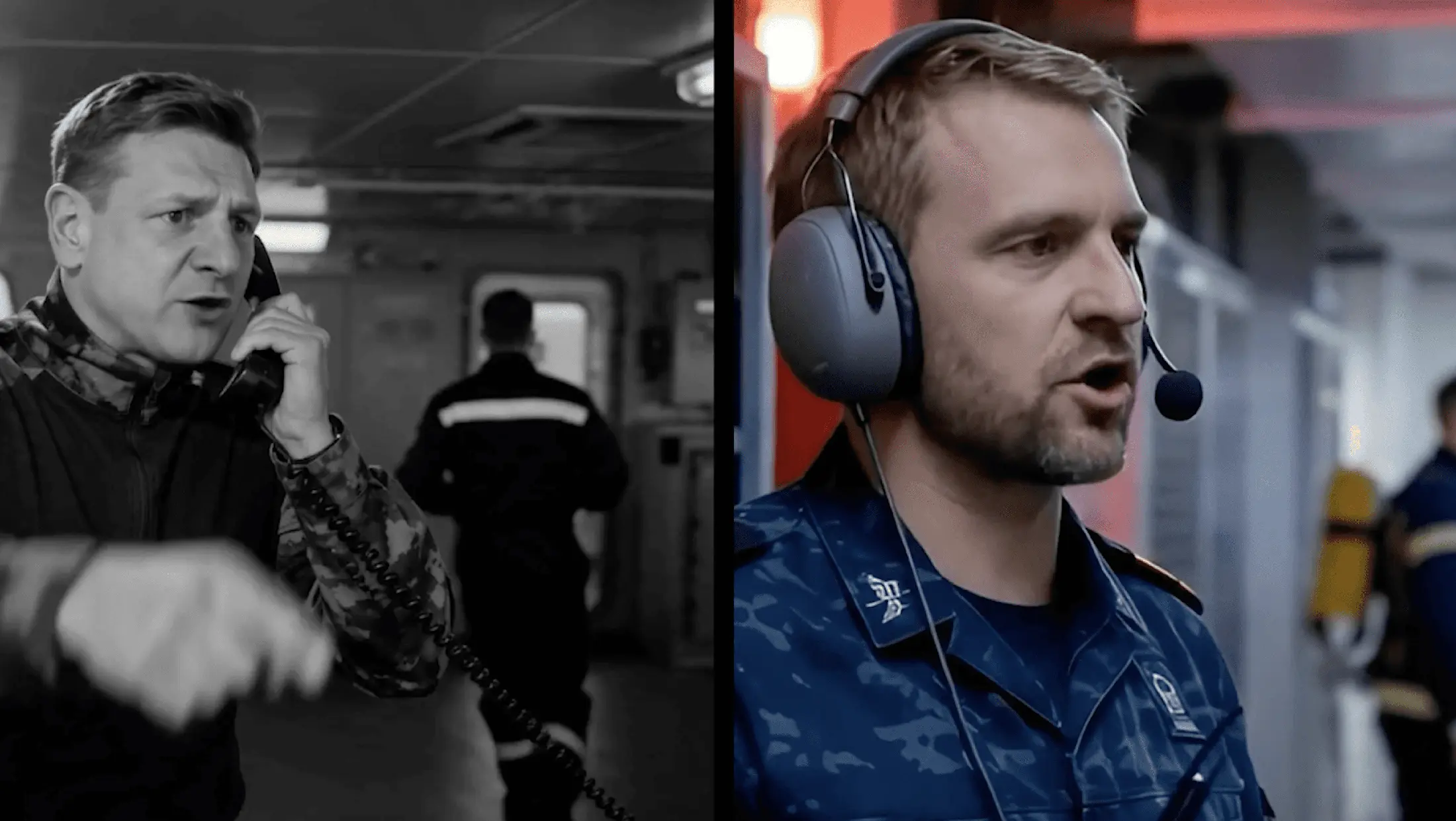
When an emergency strikes on board, every second counts. Traditional damage control relies heavily on fixed intercom stations and general ship-wide alarms, leading to confusion and delayed response times as teams cannot easily share a single live channel.
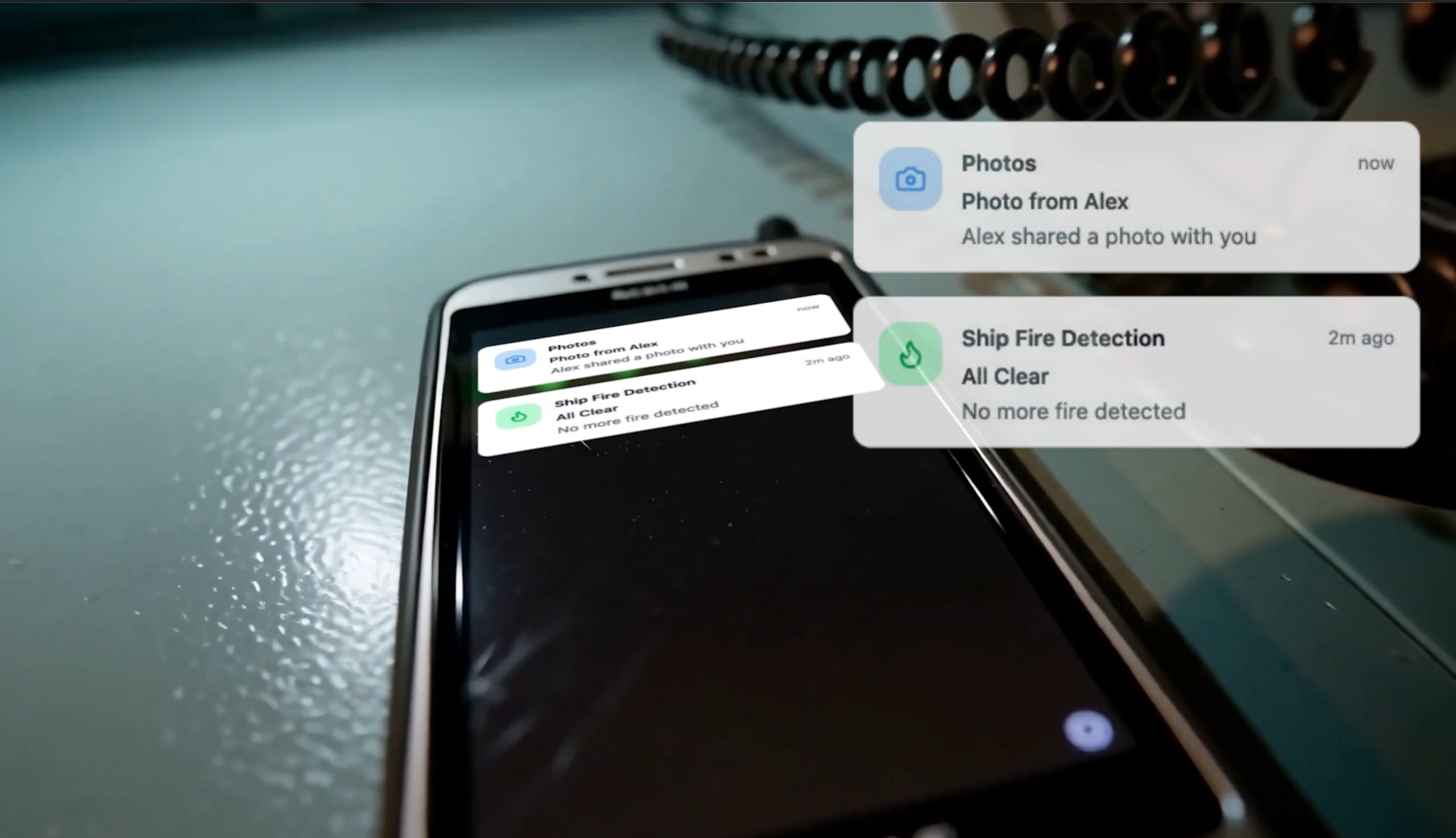
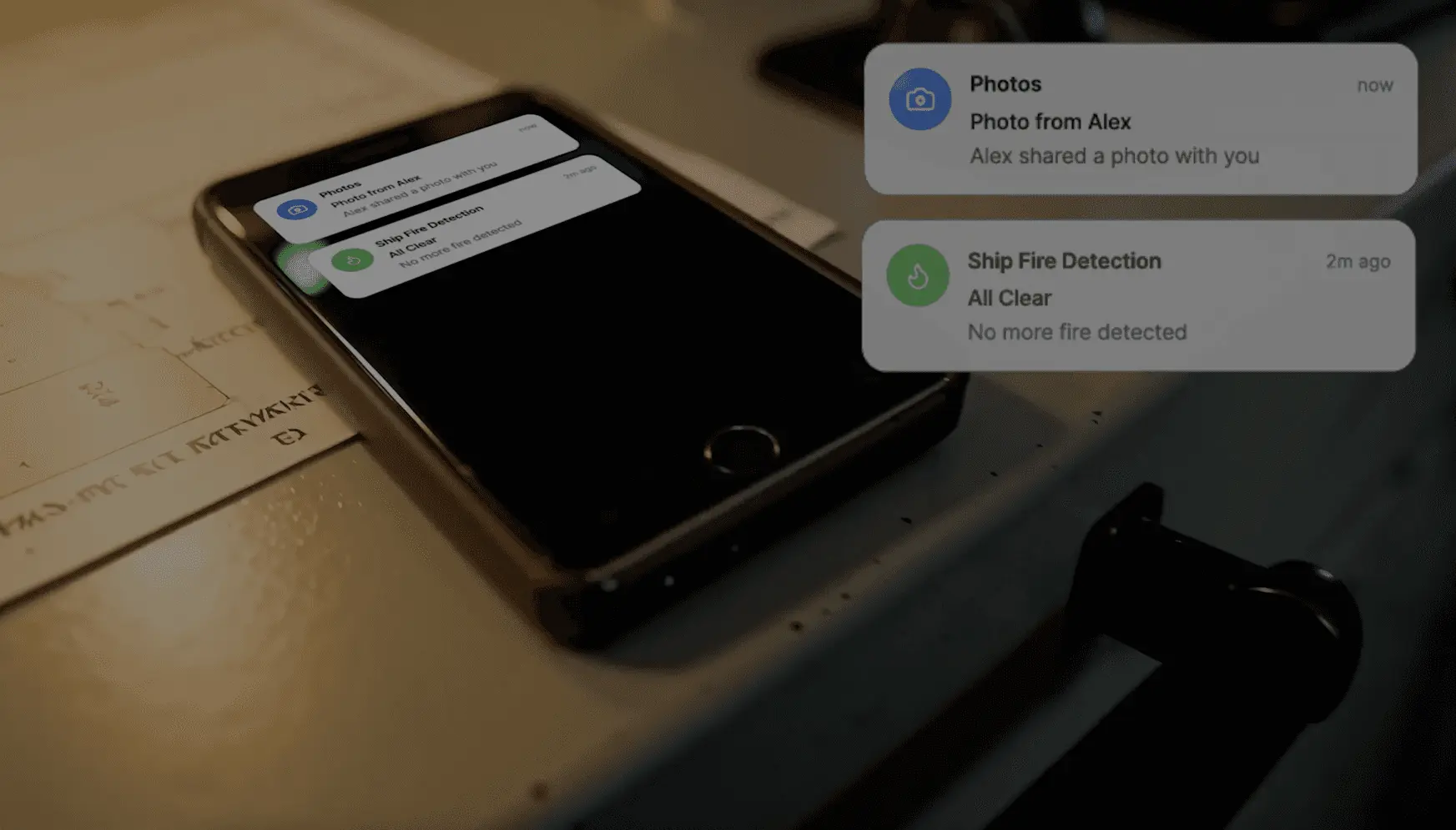
Our Alarm to Action system replaces this outdated model with targeted, intelligent workflows. Instead of a general alarm, we send specific warnings directly to the right crew members on their secure mobile devices. The system routes important tasks based on rank, permissions, and current shift status.
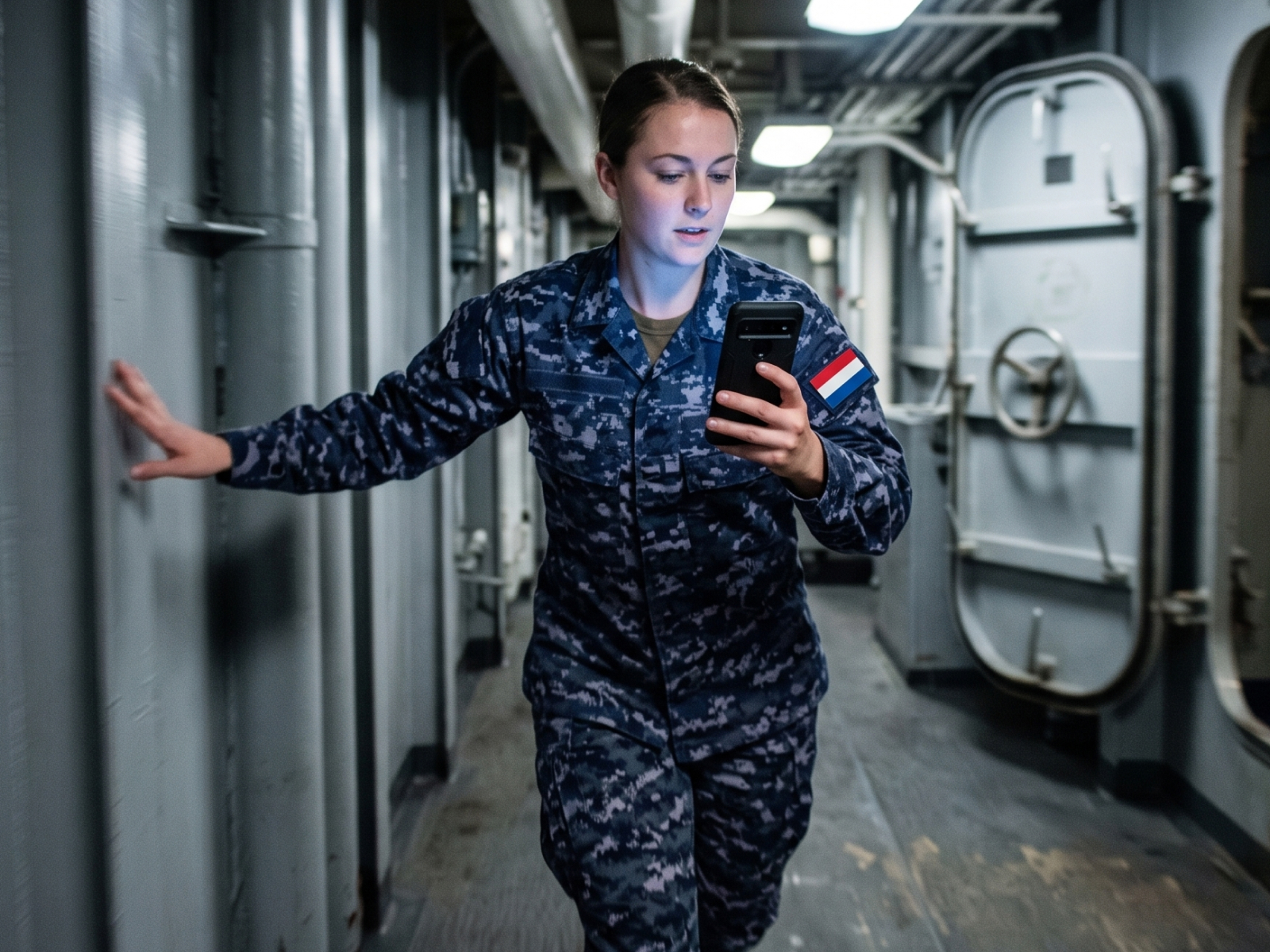
This targeted approach prevents alert fatigue, ensuring the crew is not overwhelmed by irrelevant alarms. By delivering instant alerts directly to the individual rather than a fixed console, the system enables a synchronized, immediate response and grants the crew the freedom to patrol the ship while maintaining oversight.
Intelligent Workflow Management
When a critical alarm comes in, the system doesn’t just broadcast it blindly. It matches the alert against a database of skills, qualifications, and duty statuses. It then routes the notification only to the crew members who are qualified and currently on shift.
This intelligent workflow management prevents alert fatigue and ensures that the right person with the right knowledge is immediately tasked with resolving the issue, eliminating the need to physically track down the duty officer.
Damage Control Conference Lines
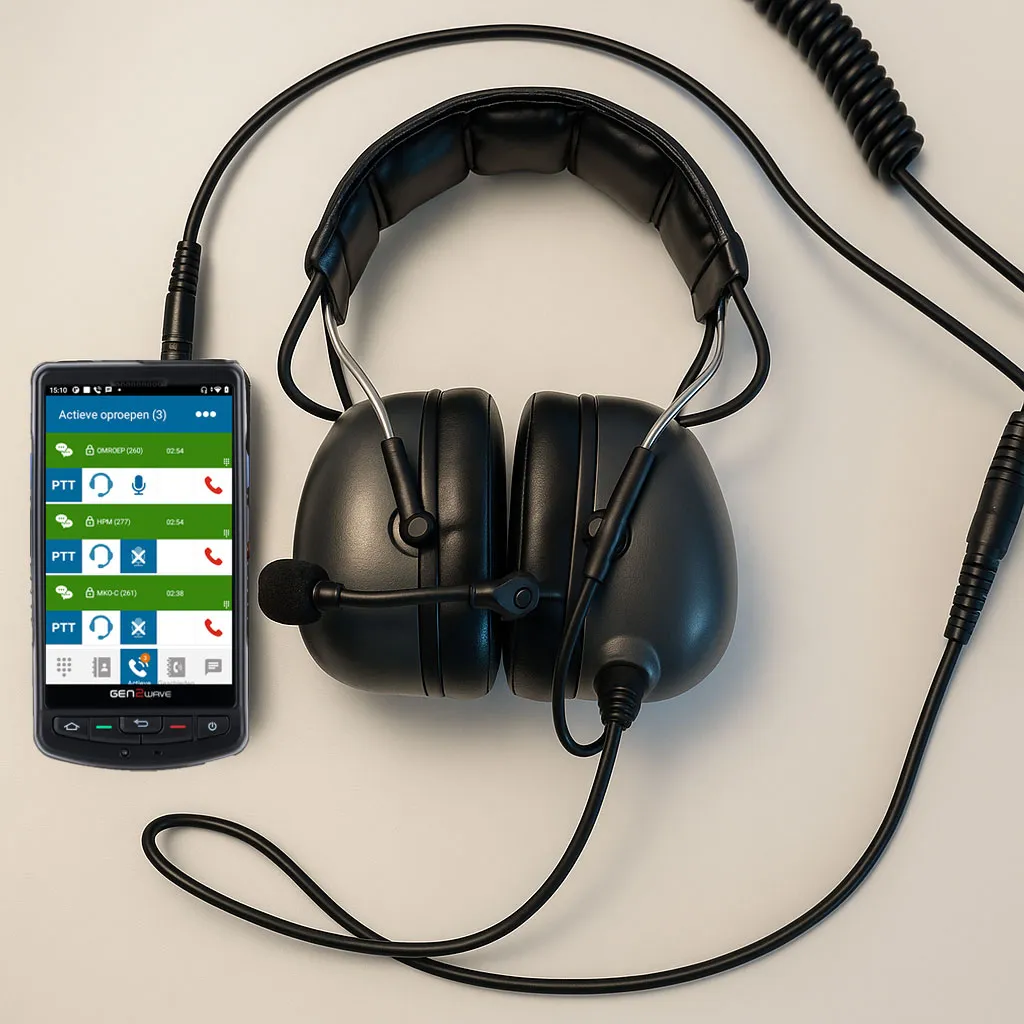
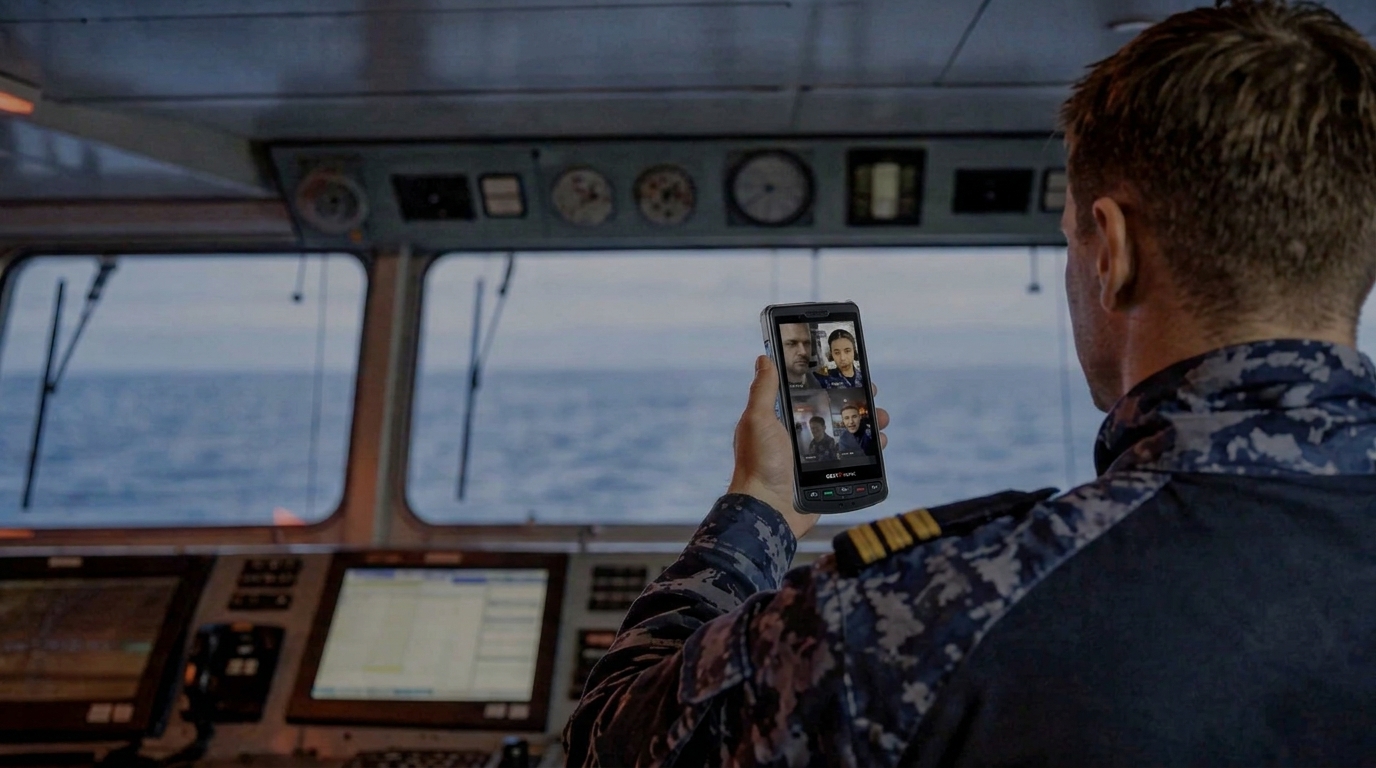
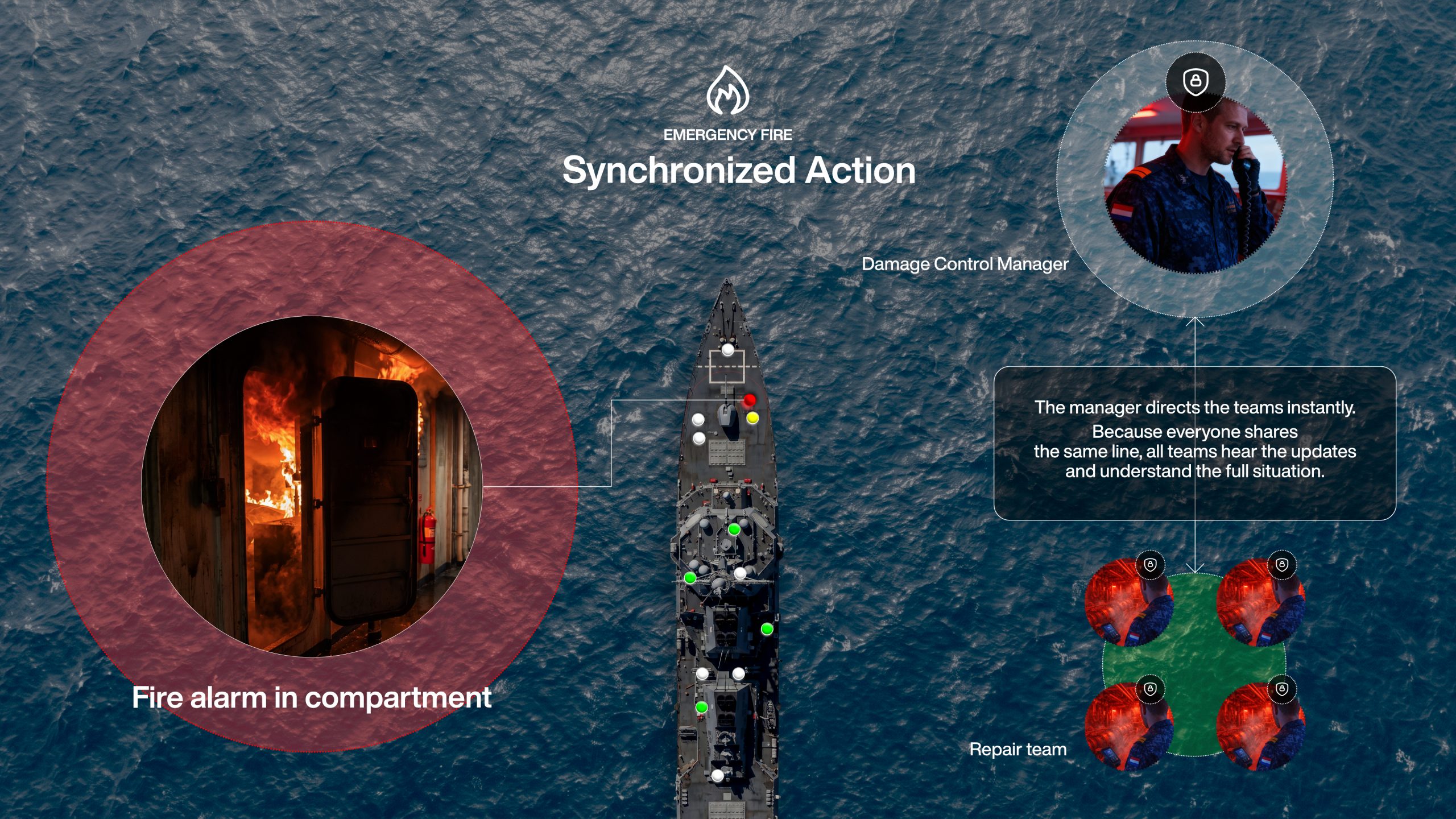
Traditional damage control relies on fixed intercom stations, meaning teams spread across the ship cannot easily share a single live channel. We establish a single secure conference line directly to the crew’s mobile devices.
The Damage Control Manager and distributed repair teams connect on the same channel wirelessly, from anywhere on the ship. Instead of one person at a fixed station, all necessary crew receive the exact same information at the exact same time, enabling synchronized action.
Mobile PMS Monitoring
Platform Management System monitoring is typically tied to fixed consoles, meaning alarms are raised at the station, not to the person. We extend PMS access to secure mobile devices, allowing the crew to retain full system control while mobile.
PMS alarms are pushed directly to the device, wherever the crew members are. This provides system oversight independent of location, granting the crew the freedom to patrol the ship without sacrificing monitoring capabilities.
Automated Incident Routing
In a crisis, the officer on duty doesn’t have time to figure out who is currently holding a specific role. They simply send one alarm, and a pre-configured script routes it to the correct crew member automatically based on their logged-in function.
For example, a Man Overboard alert instantly sends the last known coordinates directly to the bridge and simultaneously alerts the designated rescue team on their devices, initiating an immediate and coordinated response.
Continuous R&D
Our solutions are never static. Through ongoing development and the integration of artificial intelligence, the system continuously evolves, becoming faster, smarter, and more capable over time to meet the ever-changing demands of naval defense.
While it does not completely replace the public address system, it drastically reduces the need to use it. By routing specific tasks directly to individuals, fewer general announcements are made, reducing noise and confusion during an emergency.
Crew members securely log into their specific function or role at the start of their shift using their device. The system links that role to their device automatically, ensuring all role-based routing is accurate and up-to-date in real-time.
Yes, the system is designed to handle complex, multi-layered crises. It can establish multiple distinct conference lines and route different alarms to separate specialized teams simultaneously without interference.
The system is built with high redundancy. If a primary network node fails, the communication automatically falls back to secondary wireless protocols or mesh networking, ensuring the damage control conference lines remain active and secure.